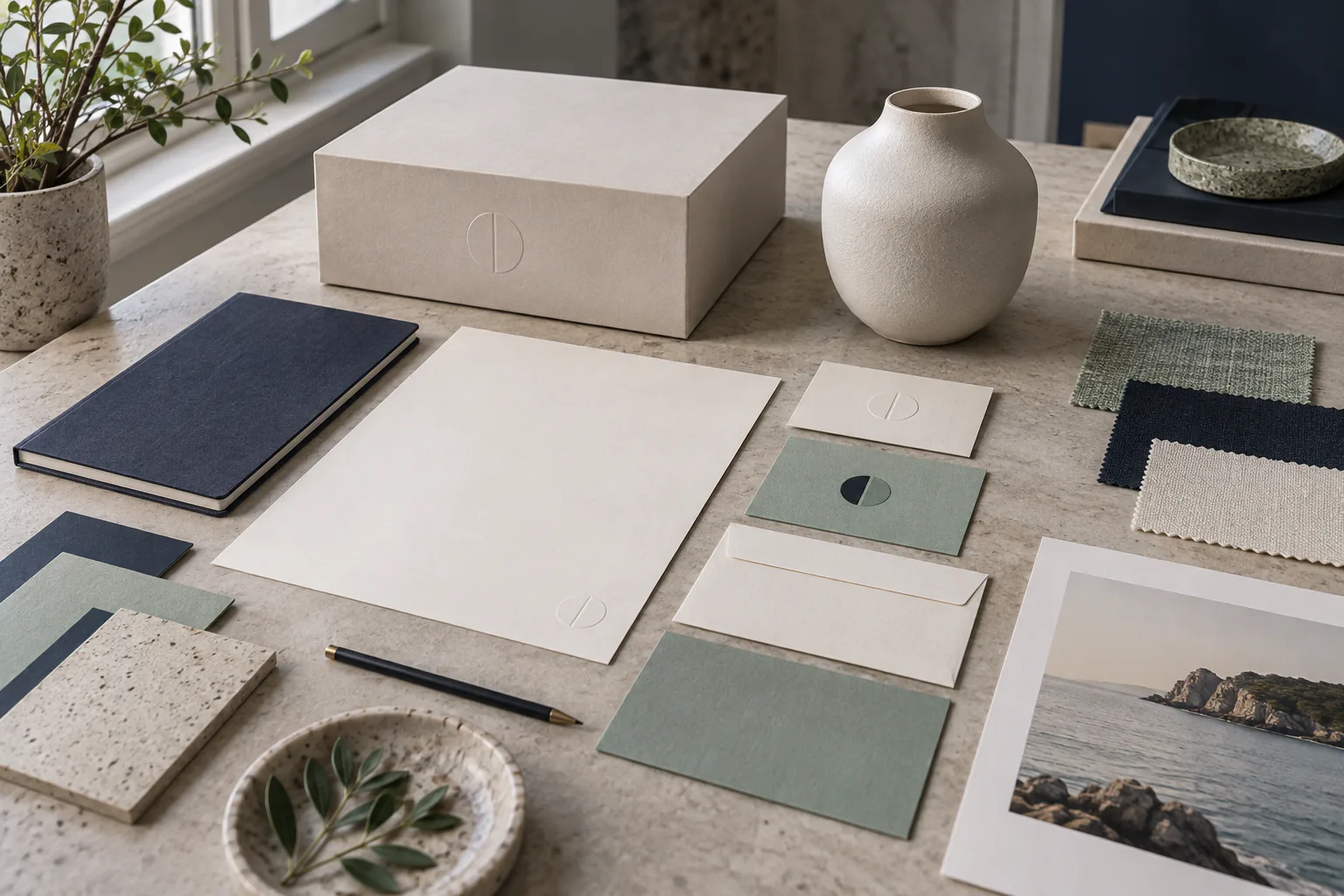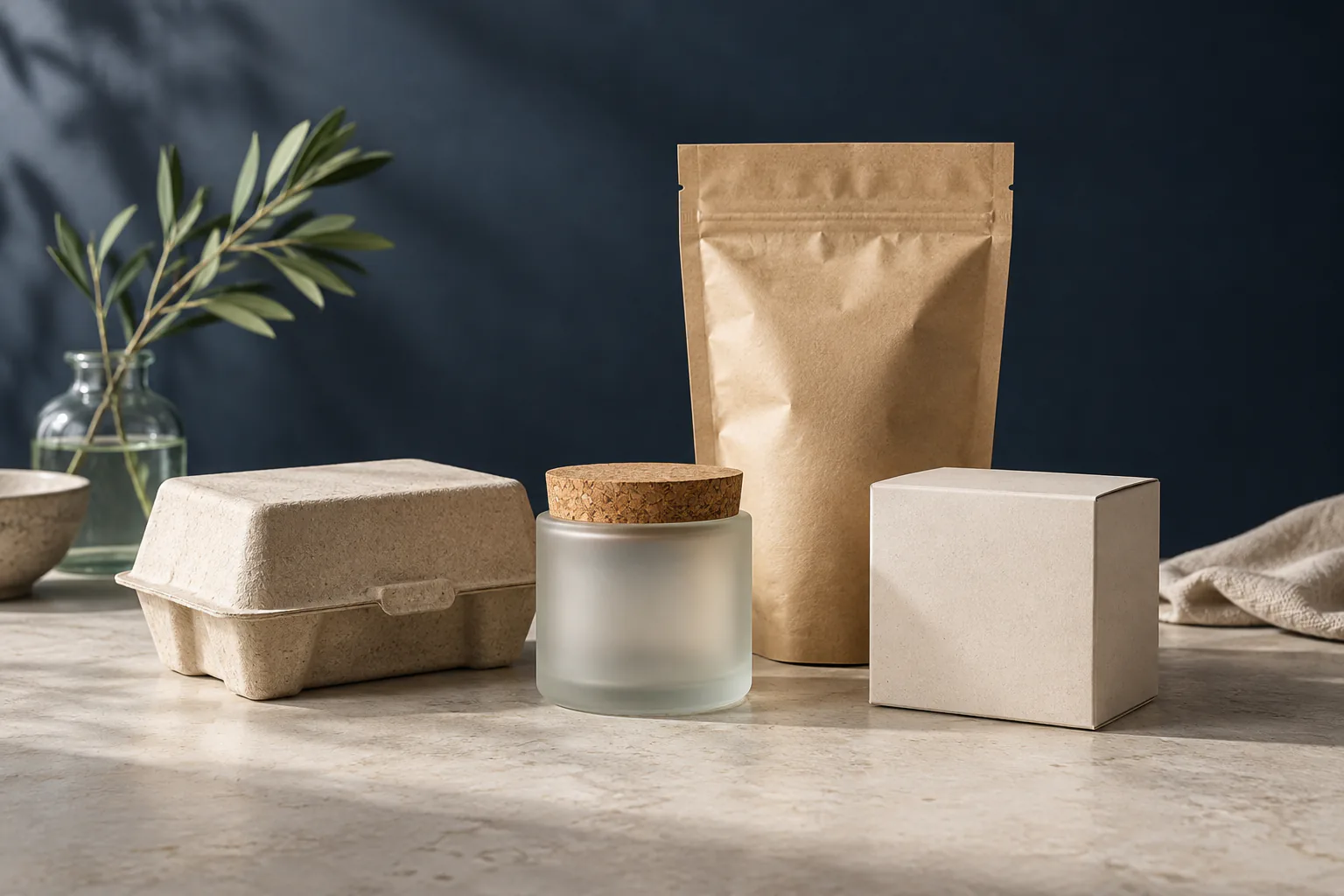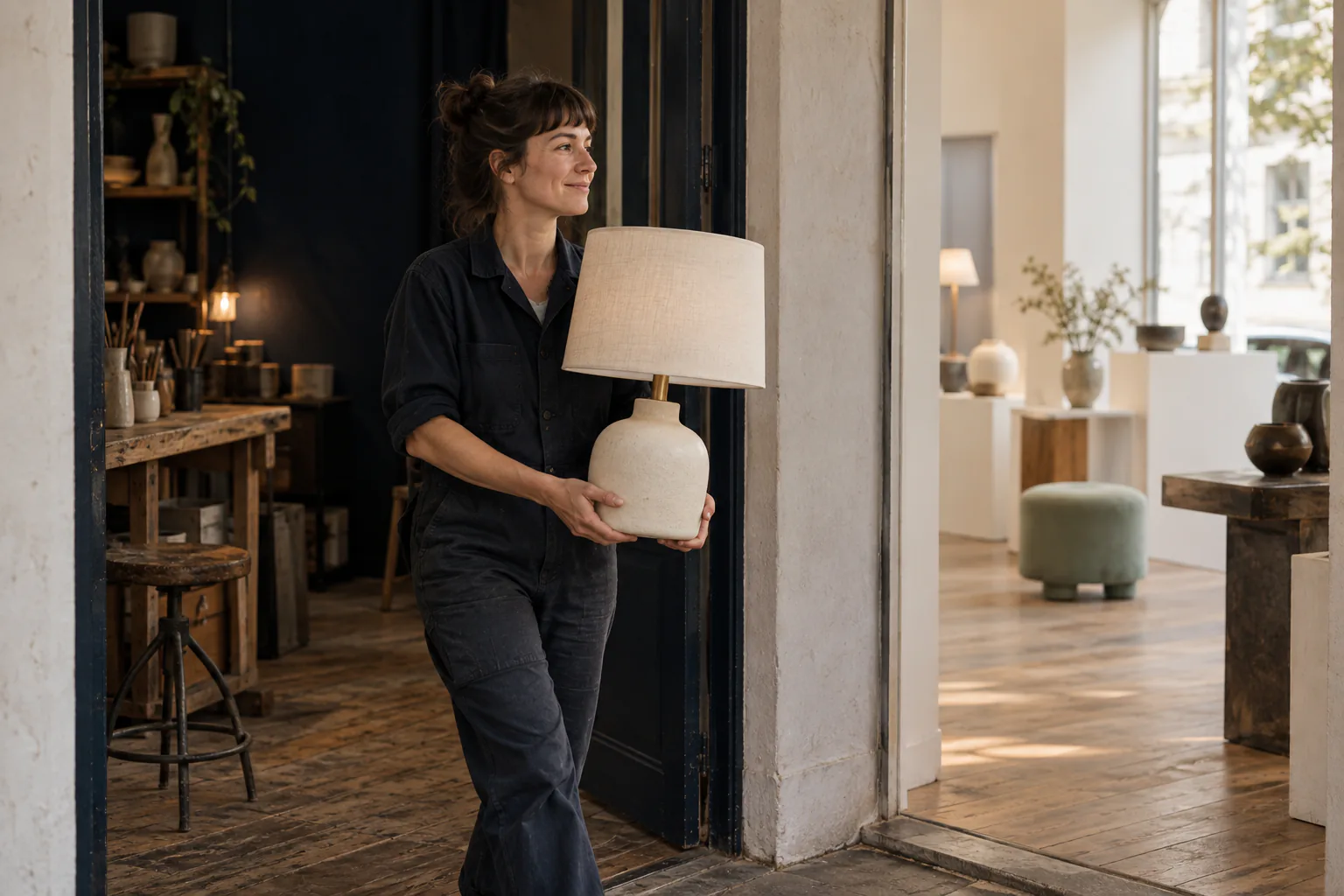
Product images and campaign visuals are among the most powerful tools in digital marketing. A great image stops the scroll, reveals a product's character, builds trust, and drives purchase decisions.
AI-powered visual creation makes it possible to quickly produce images of a product in different moods and tailored to specific audiences — for webshops, social media, ads, catalogues, or retail presentations.
What Is an AI Product Visual?
An AI product visual is an image generated with the help of artificial intelligence that presents a product, packaging, or product concept in a visual environment.
It can be:
- a premium advertising image,
- a lifestyle scene,
- a supplementary visual for a webshop,
- a packaging mockup,
- a retail shelf image,
- a campaign creative,
- a social media visual,
- a catalogue illustration.
When Is It Worth Using AI Visuals?
AI product visuals are especially useful when:
- a traditional photo shoot hasn't taken place yet,
- multiple creative directions need to be tested quickly,
- a new product concept needs to be presented,
- many variations are needed for a social or ad campaign,
- a striking visual is needed for a retail presentation,
- packaging ideas need to be shown in real-life context.
What Are the Benefits?
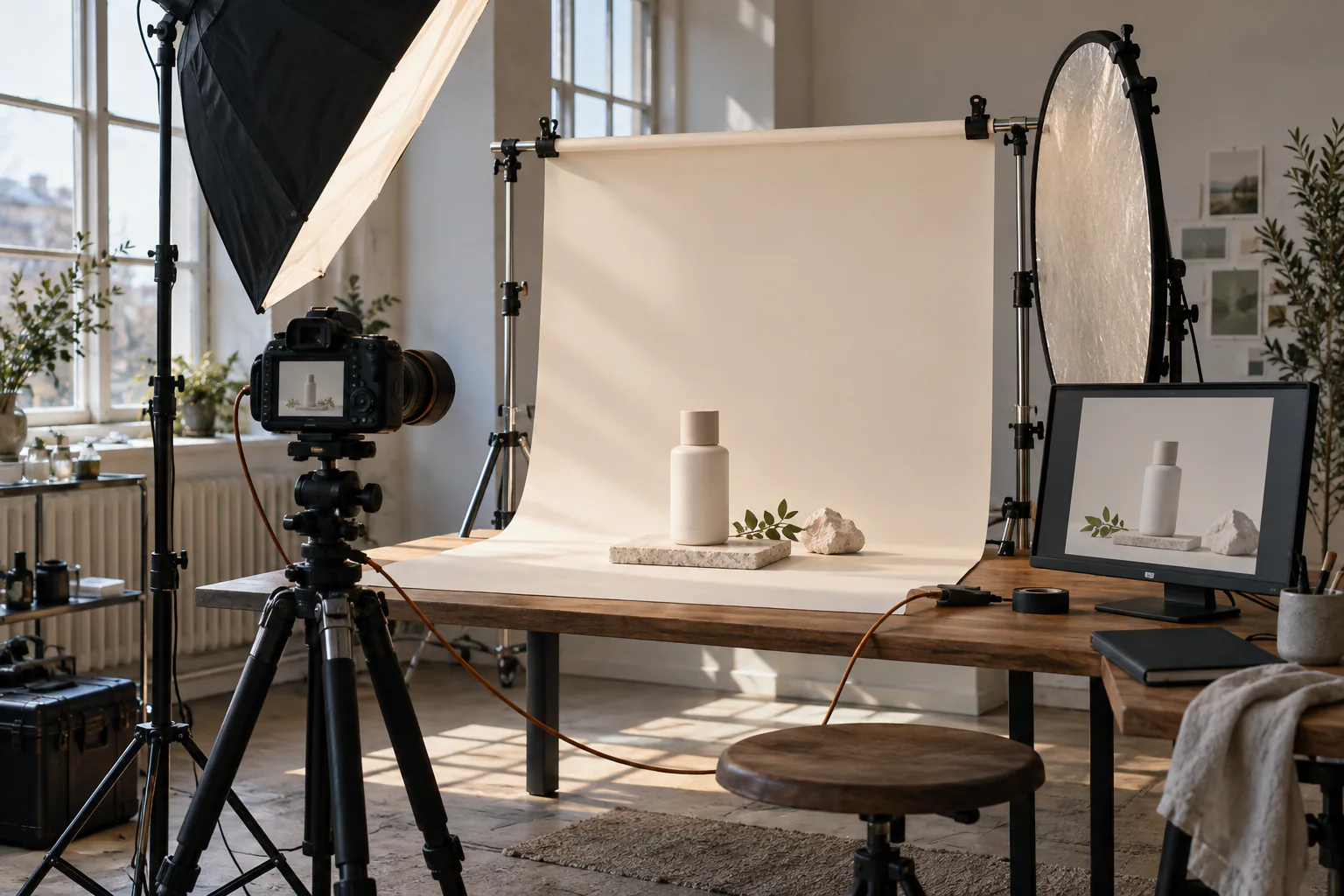
The biggest advantage of AI visuals is speed and flexibility. A traditional photo shoot often requires a location, a stylist, a photographer, props, lighting, and post-processing. AI, by contrast, can produce multiple directions for conceptual and marketing purposes much faster.
Benefits:
- Fast iteration – multiple versions can be compared in a short time
- More creative variants – images in different moods can be tested simultaneously
- Cost-effective concept testing – see what works before committing a large budget
- Flexible campaign production – react quickly to current events or seasonal needs
- Visuals tailored to different audiences – same product, different imagery optimised for different target groups
- Presenting products before production – visualising prototypes and concepts in real-world contexts
What to Watch Out For
The most important thing with AI visuals is control. An incorrect product proportion, wrong text, distorted packaging, or an inaccurate label can cause serious problems — especially if the material ends up in print, in an ad, or in a client presentation.
Always check:
- Product proportions – AI sometimes distorts, which may not be immediately noticeable
- Logo and packaging accuracy – every brand element must match the original
- Text on the image – AI-generated text regularly contains errors
- Labels – legal and mandatory elements, allergen information, ingredients
- Product characteristics – colour, material, shape, scale
- Realism – the image should look believable and not misrepresent the product
- Brand consistency – the AI visual must fit the brand's visual identity
AI Visual or Traditional Photography?
AI does not replace photography in every case. For main webshop product images, official product photos, or legally sensitive uses, traditional photography is often still required.
AI visuals recommended:
| Use case | Why it fits |
|---|---|
| Campaign creative | Fast iteration, many variants |
| Social media visual | Flexible, platform-optimisable |
| Concept and moodboard | Visualising ideas without investment |
| Retail presentation | Shelf image, display mockup |
| Packaging ideas | Shown in real-life context |
Traditional photography recommended:
| Use case | Why it's needed |
|---|---|
| Main webshop product photo | Accuracy, authenticity, buyer trust |
| Official catalogue | Print quality, legal compliance |
| Legally sensitive product | Pharmaceuticals, food, medical devices |
| High-precision packaging | Every label and element verified |
How to Make an AI Visual Professional
A great AI visual is not just a matter of prompting. The quality of the result is determined by:
Brand knowledge – AI needs to know the brand's visual language, colours, mood, and values precisely in order to produce an image that fits.
Accurate product information – without detailed input on the product's dimensions, material, colour, and packaging, the result stays generic.
Visual direction and references – without a moodboard, inspiring images, and a creative brief, AI "guesses." References bring it much closer to the desired result.
Creative control and post-processing – the AI-generated image must be reviewed by an expert eye and refined with image editing where needed. This step cannot be skipped.
Quality assurance – every final visual must be tested in real usage environments: on screen, in print, on different devices.
How Lab2Label Can Help
Lab2Label creates AI product visuals not as an end in itself, but as a marketing and brand-building tool. Visuals are planned based on the product, target audience, packaging, campaign goal, and brand character, then refined through creative control.
Every step of the process is backed by a specialist: from brief preparation through prompt engineering to post-processing and quality assurance. The result is a premium visual that can be used in campaigns, presentations, catalogues, and social media alike.
See our AI visual service, our portfolio, or request a quote — and we'll show you how to raise your brand's visual standards.
FAQ – AI Product Visuals in Marketing
Can AI visuals be used in a webshop? As supplementary images, campaign images, or lifestyle visuals — yes. For main product photos, accuracy and clarity are key. For primary product images in a webshop, traditional photography is usually recommended.
Is it possible to make packaging mockups with AI? Yes, but the final packaging information and labels must always be verified. A mockup is an excellent presentation and concept evaluation tool — but expert review is required before finalising print materials.
Does AI replace photography? Not in every case. It rather complements, speeds up, and makes creative production more flexible. The two work well alongside each other: AI visuals for campaigns, lifestyle scenes, and variations — traditional photography for main product images.
How quickly are AI visuals delivered? After receiving the brief and references, the first versions are typically ready within 2–5 working days. Final images refined based on feedback are usually delivered within 1 week.
Which products are best suited to AI visuals? Particularly effective for food, cosmetics, lifestyle, electronics, and packaged consumer goods. For complex mechanical products, industrial equipment, or medical devices, traditional photography delivers more accurate results.